




What is NOAA Weather Radio?
- Ham Talk
-
 Posted by Jackson Chen
- Leave a comment
 Posted by Jackson Chen
NOAA Weather Radio (NWR) is a U.S. broadcast service that carries local forecasts, watches, and warnings around the clock. You can tune in with a radio or scanner that supports the weather band.
The National Oceanic and Atmospheric Administration (NOAA) is a scientific agency that’s part of the U.S. Department of Commerce. They report on ocean and atmospheric conditions and warn of dangerous weather approaching. Their nationwide radio station network, NOAA Weather Radio All Hazards (NWR), broadcasts continuously 24 hours a day, 7 days a week, issuing reports on all types of hazards, including natural disasters (avalanches, earthquakes), environmental disasters (oil spills and chemical releases) and public safety issues (such as 911 telephone outages, AMBER alerts or a terrorist attack). They work with the Federal Communication Commission’s (FCC) Emergency Alert System to be the single trusted source for all weather and emergency bulletins. Their extensive network of transmitters covers the entire U.S.
How Can I Listen to NOAA Weather Radio?
To listen to these important broadcasts, you’ll need a special receiver or scanner that can pick up the stations. The NOAA weather radio band can be found in standalone receivers designed to receive these specific frequencies and in multi-band receivers such as AM/FM radios, CB radios, shortwave receivers, VHF marine radios, scanners, car radios and GMRS/FRS two-way radios.

NOAA stations broadcast in the VHF public service band and are found at these 7 frequencies (in MHz): 162.400, 162.425, 162.450, 162.475, 162.500, 162.525 and 162.550. Whether or not a two-way radio has built-in NOAA weather stations which will be indicated in the product’s details. To tune in to a weather channel, it’s typically as easy as pushing a single button, but this may vary between models. Check your owner’s manual for details. Channels 1 through 7 are the weather radio channels. Depending on your model of radio, a particular weather channel frequency will be assigned to a certain channel.
A weather-band receiver lets you listen to broadcasts. An alert-capable radio can also notify you when it detects a warning signal.
Is My Area Covered by NOAA Weather Radio?
To see the coverage in your particular region, see the NOAA Weather Radio All Hazards coverage map. They also provide a station listing by state, county coverage listing and transmitter search. Typing in your city or state and then clicking on the location on the map will bring up the transmitters in the area. Once you know the transmitter’s frequency, you can find which channel on your radio is programmed to it and then activate that channel according to your radio’s instructions.

Canada’s Weatheradio service ended on March 16, 2026. Some locations near the U.S. border can receive U.S. NOAA stations. For local forecasts and weather alerts in Canada, use WeatherCAN.
Why the NOAA Weather Radio Network is So Important
For keeping all your family members and friends on a road trip or hiking adventure informed of an approaching storm, landslide or local flooding, a walkie-talkie system with NOAA radio stations is invaluable. It can be literally life-saving, in the event of an earthquake or a hurricane, and at the very least, knowing about a major tie-up due to a large-scale emergency can save valuable time that would otherwise be spent stuck in traffic. It’s a feature that’s even available on less expensive models, making them not just a smart but also an easy decision!

Source: TECHWHOLESALE
Radios with NOAA Weather Band
For county-level alerts at home, the Raddy RW01 supports S.A.M.E. location codes. For license-free U.S. FRS communication and weather-band listening, see the Baofeng BF-88ST Pro (U.S. FRS). Check the NOAA Weather Radio coverage map for a station near you.
Emergency Radios and Portable Receivers
Raddy RW01 (S.A.M.E. alerts), Raddy SH-905, Raddy SH-906 (U.S. model), Raddy SH-907, Raddy RE40, Raddy RF750, Raddy RF750 Plus, Raddy RF75A, Raddy RF320, Raddy RF757, Raddy RF760, Raddy RF780, Raddy RF886, Raddy RF919
FRS and MURS Handhelds
Baofeng BF-88ST Pro (U.S. FRS), Radioddity HD-2 (U.S. FRS), Radioddity FS-T8 (U.S. FRS), Baofeng BF-33C (U.S. FRS), Radioddity MU-5 (MURS)
GMRS Handheld and Mobile Radios
Radioddity GM-30, Radioddity GM-30 Plus, Radioddity GM-30 Pro, Radioddity X1, Radioddity X1 Pro, Radioddity DB20-G, Radioddity DB35-G, Radioddity UB15-G, Baofeng UV-5X / UV-5G, Baofeng UV-9G, Baofeng G11S, Baofeng MP31, Baofeng GM-15 Pro, Baofeng UV-5G Plus, Baofeng UV-5G Pro, Baofeng UV-5G Mini, Baofeng MINI-5G
CB and 10-Meter Radios
Radioddity CB-500, Radioddity CB-606 Plus, Radioddity CB-900 Pro, Radioddity QT40, Radioddity QT60, Radioddity QT80
Amateur Handhelds and Multiband Radios
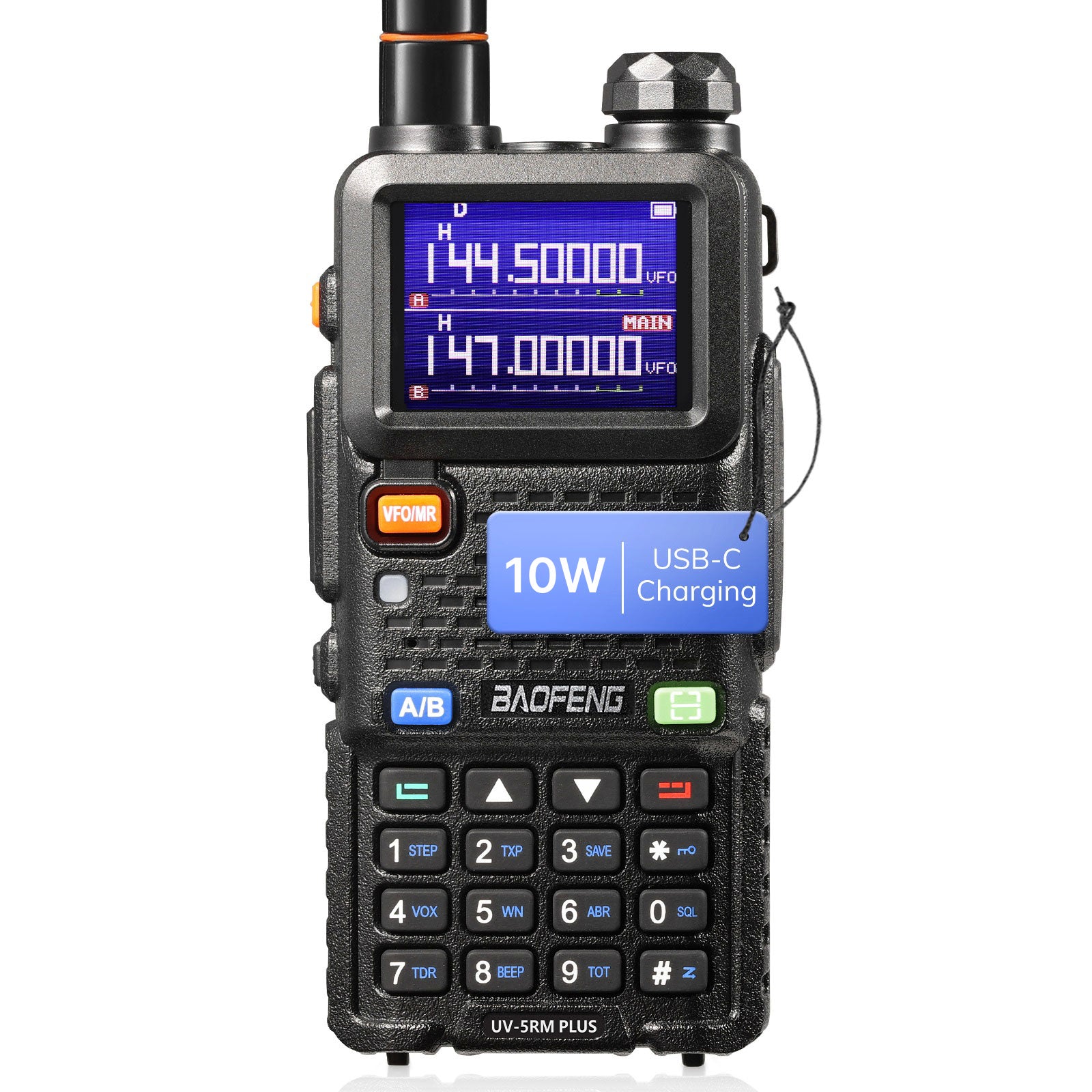
Radioddity GS-10B, Radioddity GS-10B Pro, Radioddity TRIVOX, Baofeng UV-5RM Plus, Baofeng UV-5RM Plus GPS, Baofeng UV-25, Baofeng UV-25 Plus, Baofeng UV-28 Plus, Baofeng UV-5R Mini (U.S. model), Baofeng UV-32, Baofeng UV-7B, Baofeng UV-21R, Baofeng UV-29 Pro, Baofeng SW-9, Baofeng K5 Plus, Baofeng K6, Baofeng K63 (U.S. model), Baofeng GT-5R Pro, Baofeng DM-32UV, Baofeng DM-1801 Pro, Baofeng MINI-5
1 comment
Weather Radio Review
NOAA Weather Radio is an essential tool for staying informed about severe weather updates and emergency situations. It is great to see Radioddity releasing a license-free radio with NOAA capabilities like the FS-TI / PR-T1. The article provides valuable information about the National Oceanic and Atmospheric Administration (NOAA) and their role in reporting on weather conditions and issuing alerts. The coverage map and station listings mentioned in the article are helpful resources for finding the appropriate NOAA station in your area. Having access to NOAA Weather Radio can be life-saving in situations like earthquakes or hurricanes. It is an invaluable feature to have on radios, even on more affordable models. Thank you, Radioddity, for providing this important functionality to users. https://weatherradioreview.com Vanessa Davison